Short Story Review: “Tell Them a Story to Teach Them Kindness” by B. Pladek

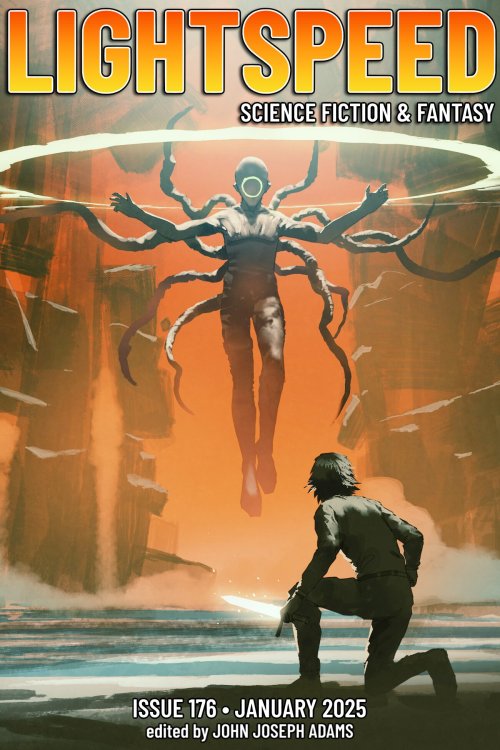
Lightspeed Magazine Issue 176, January 2025 (Story Link)

Jude is working as a “Curator” for the Milwaukee school district, assigned to prompt new stories using an AI called RIGHTR. RIGHTR is designed to create stories that offer moral instruction without offending anyone. On a whim, Jude decides to send a 10th grade teacher a story written by a human author (Le Guin’s “Omelas”), assuming – correctly – that like most people this teacher, Booker, has never read a real book and wouldn’t know what it was. The story is a hit with the kids and Jude keeps passing off human-authored stories as RIGHTR-authored prompts. The ruse works brilliantly, until it doesn’t.

The story is framed as a series of messages between Jude and Booker (as well as other’s in Jude’s orbit) and I felt this was a good format for telling this particular story. The contrast between the distinctive voices of the characters and the impersonal delivery mechanism is effective, and on-theme. The point of the story is to dramatize our present-day anxieties regarding the use of AI, as well as the alarming trend among parents (and increasingly compliant school boards) to censor anything that might “upset” their children. This story works well in fulfilling this objective, and Jude’s misconception about what made his deception successful is heartbreaking. However, in the end the story does not ask anything more of the reader than to agree with its own moral purpose. Ironic, if unintended.

Short Story Review: “Not the Most Romantic Thing” by Carrie Vaughn

Tor.com, October 11, 2023

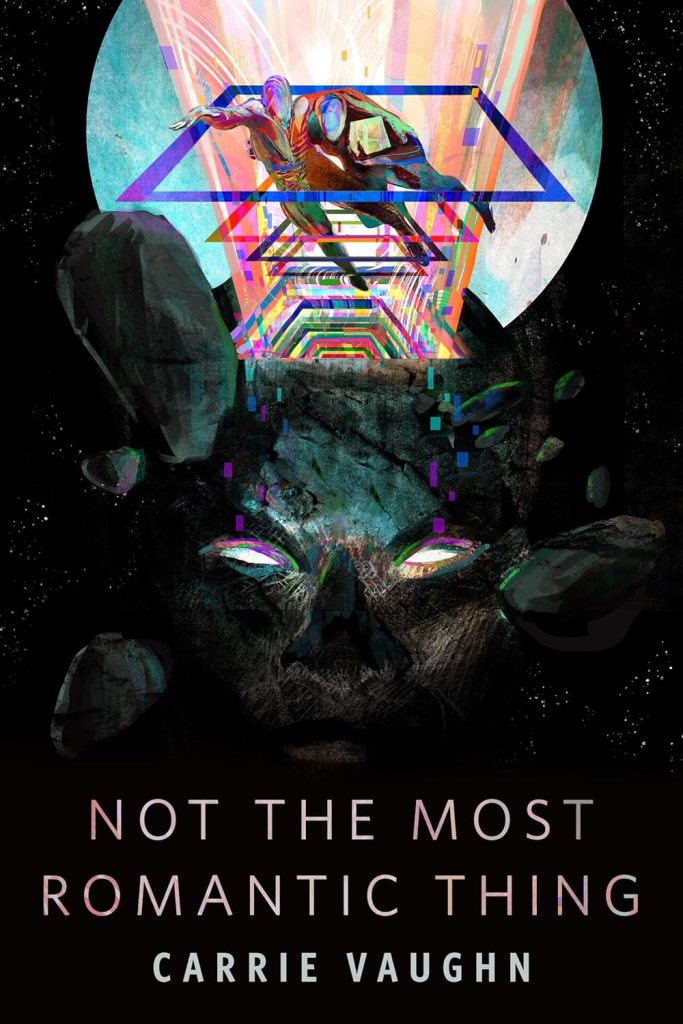
Not the Most Romantic Thing” is the fourth of Vaughn’s stories set on the bounty-hunting ship Visigoth. It is the most light-hearted and (despite the title) romantic of the tales. Set much earlier in the timeline than the other stories, it relates Graff and Ell’s first mission together when their relationship was just blossoming. This time the Visigoth is hired to extract tissue samples from a defunct lab on an asteroid scheduled for demolition. Things go sideways when the “tissue samples” give the two men a little more trouble than expected and they run the risk of missing their window to flee before the asteroid gets mulched.

The story is structured as a flashback narrated by the illegally post-human Graff, whose enhancements give him perfect recall. As such, Vaughn doesn’t bother exploiting the story’s built-in countdown clock in order to ratchet up the suspense – Graff has already indicated at the start they will make it through alive, even if readers of the previous stories need no such prompt. The story concludes in the “present”, with the two lovers remarking on that long ago mission with particular attention to a detail that could have given away the secret Graff was (at the time) so terrified of letting out. In this way the story plays as something of a postscript to its tenser, heavier-themed predecessors; a “look where we’re at now” coda to the story so far. It’s a nice addition that works best for readers who have already been following the series, though I’d be lying if I said I wouldn’t prefer the author to turn it back up to 11 the next time around.

Short Story Review: “Death is Better” by Oluwatomiwa Ajeigbe

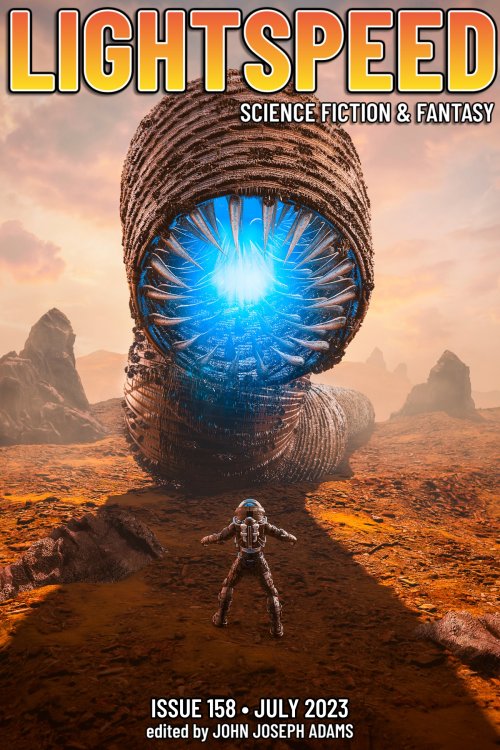
Lightspeed Issue 158, July 2023

The narrator of this story is trying – along with his little sister – to escape the alien slavers they were sold to by their own uncle, knowing that if they are caught the penalty is death. As the title of the story suggests, this would not be the worst outcome. This is a very short, relentlessly grim tale, but the author has a gift for building suspense and writing an exciting action scene. I thought the ending was a bit of a cheat (though it certainly fits with the story’s title/theme) and I could have used more engagement with the setting, but it is a well-written and exciting story nonetheless.

Novelette Review: “Didicosm” by Greg Egan

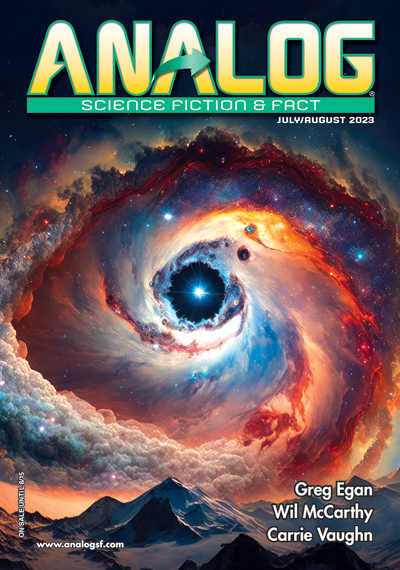
Analog Science Fiction and Fact, July/August 2023

When she was a child, Charlotte’s father committed suicide, unable to cope with his wife’s death. His actions were largely motivated by a pop-science author’s views on the structure of the universe. As an adult scientist, Charlotte dedicates her research to disproving that author’s theories.

Egan dramatizes a real-life theoretical debate over the shape of the universe, regarding orientable and non-orientable kinds of three-dimensional space. Charlotte is a compelling and relatable protagonist with noble, if also a little selfish, personal goals. This is also one of those Egan stories where the author leaps down a mathematical rabbit-hole (complete with 3D diagrams), and the reader’s level of enjoyment is likely to depend on one’s love of geometry relative to the author’s. Still, “Didicosm” is a solid story, if not among Egan’s very best.

Egan offers an even more thorough – if occasionally head-spinning – account of what a didicosm is on his website, for those interested in further understanding the concept.

Novelette Review: “Showdown on Planetoid Pencrux” by Garth Nix

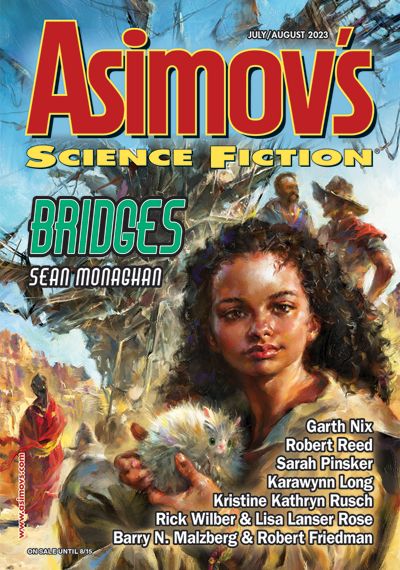
Asimov’s Science Fiction, July/August 2023

Like most SF/Western hybrids, Garth Nix attempts to mash together a variety of tropes and cliches from both genres in clever and amusing ways. For this reader, the results are mixed. The main characters are Uncia and Onca, a Sheriff and Deputy maintaining order in a small mining town on a planet outside the jurisdiction of the galaxy-dominating Federation. They are part-cybernetic beings known as “warborgs” who fought for the Hegemony against the Federation during a devastating war that the Hegemony lost. Now all warborgs are illegal under Federation law. Atrox, a sadistic warborg repurposed by the Federation to hunt down its own kind (and any humans unwilling to fall in line) has arrived to destroy Uncia and Onca and bring the planet under Federation heel.

Nix offers up a very detailed sandbox to play in, and that ends up being a double-edged sword. As fun as the setting and backstory can be, for the first two-thirds of the novelette the characters can hardly take a step or get off a line of dialogue without the author digressing into several paragraphs of exposition. The story is nearly half-finished before the main conflict is even established. This has the unfortunate effect of making the promised “showdown” feel somewhat hasty in its execution. Uncia and Onca are nicely delineated characters, though, and their relationship allows for a satisfyingly tender conclusion.

Novelette Review: “Detonation Boulevard” by Alastair Reynolds

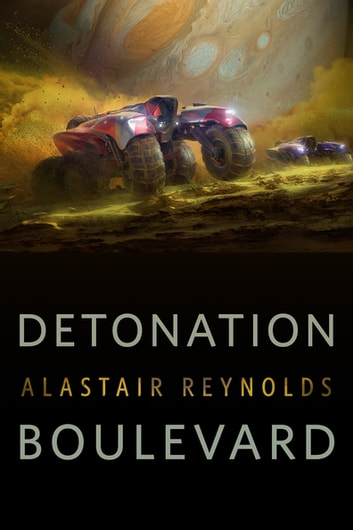
Tor.com July 12, 2023

Cat Catling is one of the top rally racers in the solar system, but she’s never won the course on the treacherous terrain of the Jovian moon Io. She hopes to change that this time around, but her rival Zimmer – who wins every year – stands in her way. The two hold a wide lead over the rest of the pack when Zimmer decides to take his car through a deadly, geyser-strewn stretch of the course known as Detonation Boulevard. Cat makes the split second decision to follow him. What happens there takes everything she thought she knew about her life and career and turns it on its head.

It’s unusual to describe a story that runs on near non-stop action as “character-driven”, but that’s what we have here. Reynolds plies us with the usual sports story sentiments like honor and glory and guts, etc., then offers us a more sinister take on the demands such competitions can make on the minds and bodies of the participants. It all ends on a jarringly cynical note that took a minute for me to digest, but I see now it was the right choice to make for this story. (p.s. nice shout out to The Sisters of Mercy)

Short Story Review: “After the Animal Flesh Beings” by Brian Evenson

Tor.com June 21, 2023

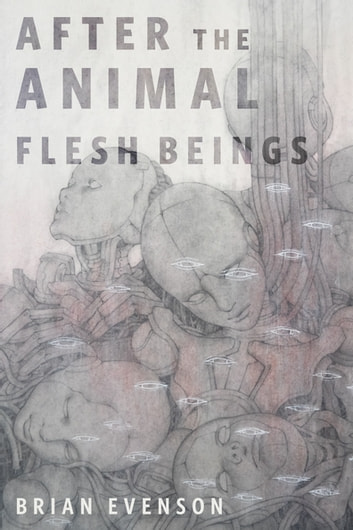
This very short story is set on a post-apocalyptic Earth abandoned by humans and populated by synthetic beings who were left behind. With little information about why they were created and abandoned, their culture is made up entirely of myth and superstition and it quickly becomes clear that their civilization is withering away. I loved so many things about this story; where to start? It is told in five brief, eerie episodes that somehow manage to convey an impression of the entire, tragic history – and longing for a better future that will never come – of this society of slowly corroding robots. The overriding motif of the story is of a damaged “God” that fashions synthetic children from metals torn from the Earth, though these children are barely functional and don’t live long. Evenson’s reputation as a teller of macabre tales especially shines in the one vignette about a human character. The author’s effective use of a collective narrative voice punctuates the overall grimness of the tale. Truly exceptional science fiction.

Hugo 2023 Fiction Finalists – The Reckoning

The Hugo ballot is (finally) here! First, a hearty congratulations to all of the finalists. Everyone on this list works hard at their craft, and at building a loyal fan base, and deserves the recognition they get.

A few months ago when voting for the Hugo Awards began, I posted my predictions for what I thought would appear on the final ballot in the fiction categories and wrote that I would return to the scene of the crime when the finalists were announced to tally my score. I did pretty good overall, except in the short story category. I mention in the previous article that I had no way of knowing how much Chinese voters would affect the outcome, and it turned out that Best Short Story was the place where they made the most difference. I am pleased to be wrong in this case because I was hoping Chinese fans would get their say, and they did.

I said I would also reveal the picks on my own ballot. Now, I have seen over the last fifteen years or so my own tastes and those of the “mainstream” Hugo voters have diverged, but this is the first time in my personal Hugo voting history that not a single work on my ballot was a finalist in the fiction categories. To clarify just how far apart we’ve moved: in 2010, I had 3 novels, 2 novellas, 1 novelette, and 2 short stories from my nominating ballot make the final list. In the 13 years since, I have had only 8 Best Novel nominees on my ballot, and never more than one in a given year; 10 novella nominations, though none since 2020; 8 novelette picks, though not more than one in a single year since 2011 (though two of these were winners, in 2011 and 2016); only 3 short story finalists, and none since 2017 (“That Game We Played During the War”, by Carrie Vaughn). But this year is the first year I’ve ever scored a big fat donut hole in all four categories – though in fairness, as you will see, I predicted as much.

Best Novel

The Finalists
  • The Daughter of Doctor Moreau, by Silvia Moreno-Garcia (Del Rey)
  • The Kaiju Preservation Society, by John Scalzi (Tor Books)
  • Legends & Lattes, by Travis Baldree (Tor Books)
  • Nona the Ninth, by Tamsyn Muir (Tordotcom)
  • Nettle & Bone, by T. Kingfisher (Tor Books)
  • The Spare Man, by Mary Robinette Kowal (Tor Books)
My Predictions (5 out of 6)
  • The World We Make, by N.K. Jemisin (Orbit Books)
  • The Kaiju Preservation Society, by John Scalzi (Tor Books)
  • Legends & Lattes, by Travis Baldree (Tor Books)
  • Nona the Ninth, by Tamsyn Muir (Tordotcom)
  • Nettle & Bone, by T. Kingfisher (Tor Books)
  • The Spare Man, by Mary Robinette Kowal (Tor Books)
My Ballot (0 out of 5)
  • Ymir, by Rich Larson (Orbit Books)
  • 36 Streets, by T.R. Napper (Titan Books)
  • The Dabare Snake Launcher, by Joelle Presby (Baen Books)
  • Eversion, by Alastair Reynolds (Orbit Books)
  • The Court-Martial of the Renegat Renegades, by Kristine Kathryn Rusch (Asimov’s Science Fiction, Sep/Oct – Nov/Dec)

The Daughter of Doctor Moreau is a pleasant surprise. This is Moreno-Garcia’s first Hugo nomination, though she has finished below the cutoff multiple times as an editor and as an author. Her novel Mexican Gothic just missed out in 2021, finishing seventh. It looks as if her Hugo fanbase is growing.

I really didn’t expect anything on my ballot to make the cut. Eversion may have been the only one within throwing distance, tough it’s likely it won’t even appear with the “nominations below cutoff” when the figures are released. Rusch’s novel is my personal favorite. This serialization was very popular with Asimov’s readers, but it doesn’t seem like there are enough of those left in the Hugo voting pool to get anything on the list in any category. Fun fact, the last time a serialized novel was nominated for a Hugo was Rollback by Robert J. Sawyer, which appeared in Analog from October 2006 – January 2007, though it also appeared as a stand-alone book during its eligibility year. The last time a serialized novel was nominated when only appearing as a serial during its eligibility year was Shadrach in the Furnace by Robert Silverberg, which appeared in Analog from August – October 1976. What could have been, if only my fellow Diving Universe fans were Hugo voters.

Best Novella

The Finalists
  • Even Though I Knew the End, by C.L. Polk (Tordotcom)
  • Into the Riverlands, by Nghi Vo (Tordotcom)
  • A Mirror Mended, by Alix E. Harrow (Tordotcom)
  • Ogres, by Adrian Tchaikovsky (Solaris)
  • What Moves the Dead, by T. Kingfisher (Tor Nightfire)
  • Where the Drowned Girls Go, by Seanan McGuire (Tordotcom)
My Predictions (5 out of 6)
  • Even Though I Knew the End, by C.L. Polk (Tordotcom)
  • Into the Riverlands, by Nghi Vo (Tordotcom)
  • A Mirror Mended, by Alix E. Harrow (Tordotcom)
  • A Prayer for the Crown-Shy, by Becky Chambers (Tordotcom)
  • What Moves the Dead, by T. Kingfisher (Tor Nightfire)
  • Where the Drowned Girls Go, by Seanan McGuire (Tordotcom)
    My Ballot (0 out of 5)
    • “Kingsbury 1944”, by Michael Cassutt (Analog, Sep/Oct)
    • The Sins of Our Fathers, by James S.A. Corey (Orbit Books)
    • “Kora is Life”, by David D. Levine (Clarkesworld #188, May)
    • “Polly and (Not) Charles Conquer the Solar System”, by Carrie Vaughn (Clarkesworld #191, Aug)
    • “Communion” by Jay Werkheiser and Frank Wu (Analog, Jan/Feb)

    When making my predictions for this category, I joked “Much like Thanos, Becky Chambers is inevitable and can seemingly conjure up a Hugo nomination with a snap of her fingers. There are none powerful enough to stop her, nor brave enough to try.” So of course she’s the one prediction I got wrong. I have not read Ogres yet but I’m a huge Tchaikovsky fan so I’m looking forward to it.

    The only nomination on my ballot I thought had an outside chance of being a finalist was Sins of our Fathers, an excellent coda to the widely popular Expanse series. The rest were all personal favorites. It’s difficult enough for anything in this category not published by Tor to score a nomination; if your novella is magazine published – even by a (fre)e-zine like Clarkesworld – your chances are diminished even further.

    Best Novelette

    The Finalists
    • “The Difference Between Love and Time”, by Catherynne M. Valente (Someone in Time: Tales of Time-Crossed Romance, Solaris)
    • “A Dream of Electric Mothers”, by Wole Talabi (Africa Risen: A New Era of Speculative Fiction, Tordotcom)
    • “If You Find Yourself Speaking to God, Address God with the Informal You”, by John Chu (Uncanny Magazine, July-August 2022)
    • “Murder By Pixel: Crime and Responsibility in the Digital Darkness”, by S.L. Huang (Clarkesworld, December 2022)
    • “The Space-Time Painter”, by Hai Ya (Galaxy’s Edge, April 2022)
    • “We Built This City”, by Marie Vibbert (Clarkesworld, June 2022)
    My Predictions (3 out of 6)
    • “The Difference Between Love and Time”, by Catherynne M. Valente (Someone in Time: Tales of Time-Crossed Romance, Solaris)
    • “A Dream of Electric Mothers”, by Wole Talabi (Africa Risen: A New Era of Speculative Fiction, Tordotcom)
    • “If You Find Yourself Speaking to God, Address God with the Informal You”, by John Chu (Uncanny Magazine, July-August 2022)
    • “Two Hands, Wrapped in Gold”, by S.B. Divya (Uncanny Magazine May/June)
    • Six Deaths of the Saint, by Alix E. Harrow (Amazon Original Stories)
    • “In Mercy, Rain”, by Seanan Mcguire (Tor.com 7/18)
    My Ballot (0 out of 5)
    • “Solidity”, by Greg Egan (Asimov’s Sep Oct)
    • “Resilience”, by Monalisa Foster (Robosoldiers: Thank You for Your Servos; Baen Books)
    • “Cloudchaser”, by Tom Jolly (Analog Jan/Feb)
    • “The Sadness Box” by Suzanne Palmer (Clarkesworld #190 July)
    • “Necklace of Memory”, by Robert Reed (Asimov’s May/June)

    Five of the finalists were Nebula nominees, while I had predicted four of them to make the grade. One of my Nebula crossover picks didn’t pan out nor did my prediction that Seanan McGuire would score a Wayward Children hat trick this year. We also see the first of the Chinese-language nominees, “The Space-Time Painter” by Hai Ya. I suppose I may have to hit up Google translate when the voter packet comes out.

    Among the novelettes on my ballot, I thought Suzanne Palmer’s “The Sadness Box” had a decent chance of being a finalist, so much so that I considered making it one of my predictions. The unreasonably hopeful part of my brain thinks Egan and Reed always have a chance, even though it has been awhile since either were within arm’s reach of a Hugo.

    Best Short Story

    The Finalists
    • “D.I.Y.”, by John Wiswell (Tordotcom, August 2022)
    • “On the Razor’s Edge”, by Jiang Bo (Science Fiction World, January 2022)
    • “Rabbit Test”, by Samantha Mills (Uncanny Magazine, November-December 2022)
    • “Resurrection”, by Ren Qing (Future Fiction/Science Fiction World, December 2022)
    • “The White Cliff”, by Lu Ban (Science Fiction World, May 2022)
    • “Zhurong on Mars”, by Regina Kanyu Wang (Frontiers, September 2022)
    My Predictions (2 out of 6)
    • “Destiny Delayed”, by Oghenechovwe Donald Ekpeki (Asimov’s May/June)
    • “Give Me English”, by Ai Jiang (F&SF May/June)
    • “Bonsai Starships”, by Yoon Ha Lee (Beneath Ceaseless Skies 2/10)
    • “Skeleton Song”, by Seanan McGuire (Tor.com 10/26)
    • “Rabbit Test”, by Samantha Mills (Uncanny Magazine, November-December 2022)
    • “D.I.Y.”, by John Wiswell (Tordotcom, August 2022)
    My Ballot (0 out of 5)
    • “Beneath the Surface, a Womb of Ice”, by Deborah L. Davitt (Analog Nov/Dec)
    • “Boy in Key of Forsaken”, by Eric Del Carlo (Analog May/June)
    • “Timekeeper’s Symphony”, by Ken Liu (Clarkesworld #192 Sept)
    • “The Empty”, by Ray Nayler (Asimov’s Nov/Dec)
    • “Maximum Efficiency”, by Holly Schofield (Analog Nov/Dec)

    When I wrote that I had no way to predict how Chinese voters would impact the results, this is what I was talking about. At least I scored with the two English language nominees. I am curious to see how close I got with my other predictions when the full details are released in October. For now I’m looking forward to the hastily translated versions of the other stories appearing soon online!

    Ballot-wise, Ken Liu always gets some votes and Ray Nayler has slowly been raising his profile with award voters the last few years, but i still considered their chances distant. My Analog favorites had little chance, but they deserved my vote anyway.

    Final Predictions Score: 63% (15 out of 24)

    Final Ballot Score: 0% (0 out of 20)

    I will revisit these nominees with my reviews of the finalists in the short story and novelette categories at some point in the future. I have read Two of the Best Novel nominees (Moreau and Scalzi) and will try to find the time to read the other four before voting ends. I have not read any of the novella finalists and I will try to work my way through those as well.
    Novella Review: “The Death Hole Bunker” by Kristine Kathryn Rusch

    Asimov’s Science Fiction, July/August 2023

    “The Death Hole Bunker” starts a new storyline in Kristine Katherine Rusch’s Diving Universe, with some fascinating new additions to the mythology. Hogarth is mapping “death holes” that have been appearing underground on the planet Wyr for decades or more. The death holes always have mummified remains in them, and Hogarth always gets an uncomfortable, tingling feeling when he is near one. This time, there is no tingling feeling and he and his partner Raemi find a staircase leading to a series of rooms, suggesting someone once lived there. In one of the rooms is a treasure trove of rare and valuable items known as “ivory trees”, which are neither trees nor made of ivory. Rather they are branch-like objects made of an unknown material that no one has been able to replicate. And there are even stranger mysteries to uncover deeper in the bunker.

    Of all the excellent worlds Rusch has gifted to the world, the Diving stories and novels are probably the most rewarding. This far far future, galaxy-spanning civilization is home to histories and technologies lost to the long march of time, unearthed by people with and incomplete understanding of their application, with often perilous outcomes. “The Death Hole Bunker” is as suspenseful and mysterious as any of the tales that came before. The only drawback is that this is one of those Diving stories meant to part of a longer work, so the long denouement acts a preview of things to come, leaving a lot of questions dangling with no closure for the reader. Of course I plan on reading the promised novel, but for now it leaves me with a tinge of bitterness on the back of my tongue for an otherwise excellent work of science fiction.

    Novelette Review: “Imagine: Purple-Haired Girl Shooting Down the Moon” by Angela Liu

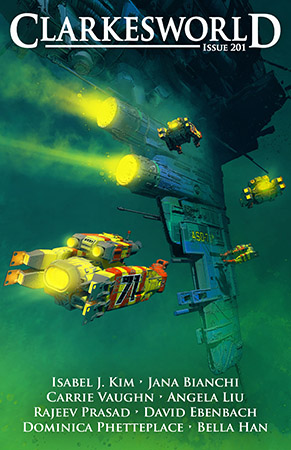
    Clarkesworld #201, June 2023

    I am always intrigued by science fiction stories about art. Especially in the now times, when new technology (NFTs, generative AI) are reshaping our ideas of how art objects will manifest in the future, with all the attending controversies and concerns. AI prompts are a part of what Angela Liu explores in this story (the title itself being one such prompt), but the goings on mostly focus on a technology called “NC orbs”, in which the artist can “paint” fresh memories into the mind of the user. Strapped for cash, the narrator of the story agrees to illegally paint an NC orb for a client of the brothel she sometimes works at, and consequences ensue. Liu has created quite a detailed cyberpunk dystopia here, though one so relentlessly grim it flirts with absurdity. Quite early in the story it is obvious this is all spiraling toward unavoidable tragedy. Despite this, the characters are compelling, and the author’s engagement with the story’s themes coheres quite nicely.